MPIWG Postdoctoral Fellowship┋“Biocultural Worlding”
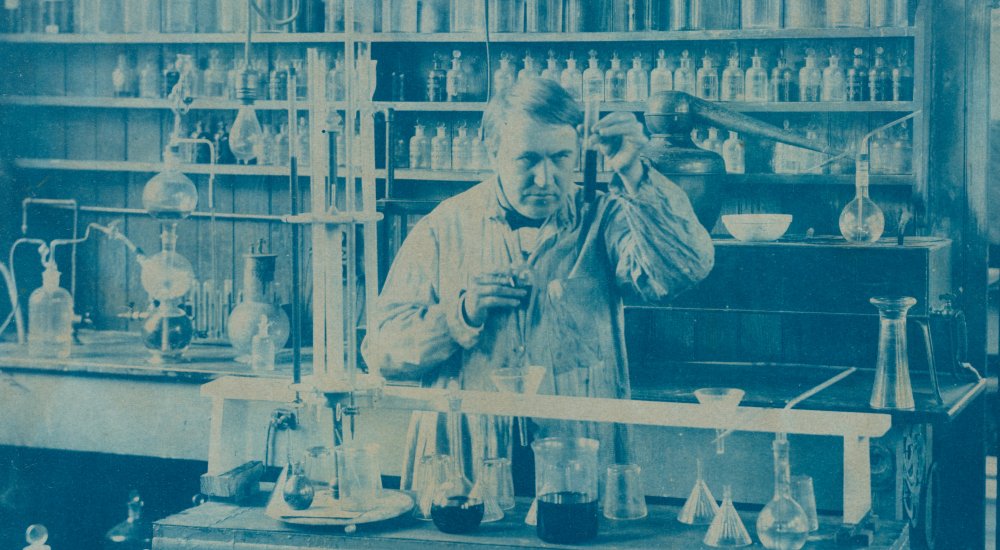
The Max Planck Institute for the History of Science (MPIWG) is an internationally respected research institute of the Max Planck Society (MPG) with currently two research departments, several research groups, and a graduate school. At the MPIWG, around 150 scholars from all over the world investigate the sciences past and present, working together on a collective, collaborative, and transdisciplinary basis. The MPIWG is renowned worldwide as a hub for reflection on the role of the sciences in politics and society. It is located in southwestern Berlin, close to the campus of the Free University Berlin and other research institutions.
Max Planck–NTU Singapore Centre for Biocultural Worlding co-led by Dagmar Schäfer, seeks to appoint two Postdoctoral Scholars (m/f/d) on “Biocultural Worlding”
– for four years, with employment contract, TVöD-Bund pay scales (E13) – starting on November 1, 2026
The Max Planck–NTU Singapore Centre for Biocultural Worlding (CBCW), established in April 2026, is a joint initiative of the Max Planck Institute for the History of Science (MPIWG) and the Nanyang Technological University Centre for Contemporary Art (NTU-CCA), with staff and leadership based in Berlin and Singapore. The Center operates at the intersection of the history of science, artistic practice, and curatorial research. Its aim is to bring together diverse voices from the sciences, law, and material culture across Asia-Pacific and the world, with emphasis on knowledge creation, ownership, and belonging, and on methodological approaches that foreground artistic, curatorial, and community-based research. For more information, visit:
www.bioculturalworlding.org
This position is intended for a scholar whose research aligns with the CBCW’s focus on biological, cultural, and epistemic diversity. The postdoctoral scholar will be based in Berlin, report to the Co-Deputy Director of the CBCW at the MPIWG, and work in close exchange with the CBCW team in Singapore (time difference: 6-7 hours). We especially welcome applications from scholars who are interested in multidisciplinary collaboration and practice-based knowledge.
Your responsibilities
Research:
- Design and conduct an independent research project on inter-generational biocultural knowledge practices belonging to communities that have been historically marginalized in relation to the sciences and, relatedly, the efforts in these communities (such as restitution, conservation, and preservation) to recover/retain their agency over the longue durée; generate research outputs.
- Publish and present and research findings; exchange ideas regardless of individual linguistic or geographic boundaries to refine methodologies across history, art curation, science, culture, and law for engaging principles of equity and balance among biological, cultural, and epistemic diversity.
CBCW Public Programming:
- Contribute to CBCW research program in one of two ways, contingent upon experience:
- Development of concepts for building mutual connections between individual research project and other CBCW projects, and for raising the public profile of CBCW research via development of exhibitions or other events; development and implementation of concepts for external and independent representation (e.g., bulletins) and for communication with target-groups (e.g., politicians, businesses, cultural leaders).
- Development of concepts for pedagogical formats and interdisciplinary trainings (e.g., barcamps, winter/summer school) relevant for training practitioner doctorates.
- Support research and public programming initiatives of CBCW (e.g., planning, coordination, and reporting of activities; preparing content for analog and digital research communication tools); contribute to and participate in MPIWG research activities and dialogues.
Required Qualifications
- Education: PhD in a relevant research field such as history of science, museum studies, science studies, legal history, or other related humanities fields.
- Research Expertise: Solid knowledge of history of science or history of knowledge research methods, including archival work, source criticism, oral history, and narrative analysis.
- Publication Experience: Outstanding peer-reviewed publication record and proven international visibility (invited lectures, networks).
- Outreach Experience: Proven record of having exhibited historical research in public spaces.
- Languages: Excellent written and spoken English and German. Fluency in at least one additional language required to conduct individual historical research. Knowledge of Asian language(s) a plus.
- Skills: Strong organizational skills and ability to manage multiple tasks and deadlines. Proven ability to work independently and collaboratively in an international, interdisciplinary team.
Other Desired Qualifications
- Familiarity with how injustices result from imbalances among biological, cultural, and epistemic diversity.
What we offer
- flexible working hours; the opportunity to work from home as arranged with your superior; the opportunity to work part-time
- annual year-end bonus; occupational pension (VBL); subsidy for public transportation within Berlin or Germany (“Jobticket”); paid leave on Christmas Eve (December 24) and New Year’s Eve (December 31) in addition to regular annual leave
- weekly in-house yoga classes; regular information on occupational health management courses offered by our partner health insurance companies
- access to the wide range of training courses offered by the MPG’s Planck Academy
- close contact with all research and research-support units with the opportunity for direct, personal dialogue
- an international setting with staff and guests from more than forty countries
The Max Planck Society is an equal opportunity employer that strives to foster an inclusive workplace. As an institute of the MPG, the Max Planck Institute for the History of Science supports a working community for all free from discrimination and harassment. We explicitly encourage applications from qualified individuals who belong to groups that are often underrepresented in the workplace due to age, disability, ethnicity, family status, gender, nationality, race, sex, sexual orientation, socioeconomic background, or religion.
Please follow the links to find out more about the MPIWG’s policies on gender equality and hiring practices for people with disabilities, as well as Germany’s anti-discrimination laws as outlined in the General Equal Treatment Act.
Your application
Please submit your application with complete documents, preferably without a photograph, through our application portal. Include cover letter, curriculum vitae; project proposal (500-700 words) including list of publications (in a single PDF file), copies of qualifications, and names of two referees.
https://recruitment.mpiwg-berlin.mpg.de/position/36470785
Applications must be received by August 10, 2026 (23:59 CEST).
Please note that we can only accept electronic applications submitted through the portal.
Inquiries
For questions concerning the position, the Institute or the application process, please send an email to cbcw@mpiwg-berlin.mpg.de.
Address
Max-Planck-Institut für Wissenschaftsgeschichte, Boltzmannstraße 22, 14195 Berlin, Germany