Gerda Henkel Grants: Funding Programme Lost Cities
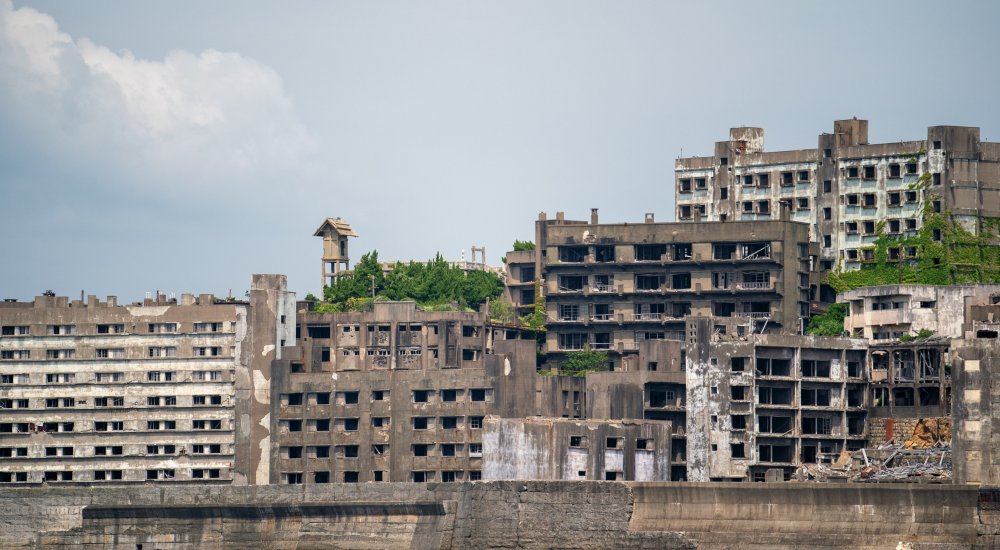
The enormous process of urbanization, which has defined world history for thousands of years in different economic situations and with regional variations, and which is now developing a particular dynamism, has another side to it that initially appears paradoxical – namely the shrinking and entirely abandoned cities, the so-called Lost Cities. Current transformation processes in various parts of the world mean that many of these Lost Cities are emerging. Nevertheless, the phenomenon is not a new one, but has been a widespread hallmark of urban history since the emergence of urban culture in the fourth century B.C. It has therefore been perceived, reflected on and interpreted in very different ways in the cultural history of urban life. With this finding as a starting point and a goal of placing current problem situations in a greater historical context, the Gerda Henkel Foundation has established a new funding programme for the theme Lost Cities. Perception of and living with abandoned cities in the cultures of the world.
Key information in 5 steps
1/ Who is eligible for support?
- PhD holders with a university affiliation from the humanities and social sciences.
- Only applications from research groups will be considered.
- The Gerda Henkel Foundation understands a research group to mean at least two scholars active on the project who are financed by Foundation scholarships and research joint issues.
- Applications do not depend on the participants' nationality or the location where they work.
2/ What thematic focus must a project have?
- the funding programme is designed to be interdisciplinary
- A focus on culturally specific and cross-cultural causal connections and regionally / temporally specific items.
- Of especial interest are the lost cities themselves and the different ways in which they are ‘read’, instrumentalised and codified in the various cultures and periods of time.
3/ What can applications be made for?
- For project members involved in research projects, applications may only be made for PhD or research scholarships.
- A research scholarship can be granted for the applicant (project lead).
- Support for research projects takes the form of staff, travel, equipment/materials and/or other costs being covered.
- Support for student assistants.
- In total, an application can include a maximum of three scholarships plus travel and equipment/materials costs per research group.
- Research duration: up to 36 months.
4/ What is not eligible for support?
- Single scholarships for persons not members of the research group
- Positions for academic staff subject to mandatory social insurance
- More than three scholarships for academic staff
- Overhead costs
- College and tuition fees
- Applications only for travel and equipment/materials
5/ How and when can an application be submitted?
- Applications can only be made in digital form
- Applications must be in English or in German
- The next deadline ends 27 May 2026.
Call for Application
The funding programme is designed to be interdisciplinary and to facilitate projects in which there are varied dimensions to the examination of abandoned cities. At the same time, there should be a focus on causal correlations, both with regard to specific individual cultures and spanning all cultures, and on specifics of place and time. Thus far, such places have emerged for very different reasons, including military destruction, natural disasters, epidemics, environmental pollution, economic collapse, financial speculation, mobility, migration, centralization, deindustrialization, or post-colonial change, to name but a few.
The aim of the programme is to describe the tangible cultures of interpretation, knowledge and perception within these different contexts. Lost Cities are part of a distinct culture of memory, for example, which serves for the negotiation of identities, the preservation of knowledge cultures, the formulation of criticism of progress, or the construction of mythical or sacral topographies as part of a veritable “ruin cult”. On this basis, the focus here should not be on the question of which factors led to the city’s abandonment. Rather, it is the abandoned cities themselves that are of particular interest, as well as the different forms of their interpretation, instrumentalization and coding in various cultures and time frames.
The Foundation's Board of Trustees decides on the applications on the basis of recommendation by an Advisory Committee. As expert reviewer contributes: Prof. Dr. Martin Zimmermann, Ludwig-Maximilians-University Munich.
Application
Information on applicant eligibility and application requirements
Prerequisites
Eligible to apply are post-doctoral researchers based in a university and working in the area of the humanities and the social sciences.
The proposed projects must address focal themes that are being examined by a research group, which the Foundation understands to mean teams of at least two scholars actively taking part in the project work, who are to be funded by scholarships from the Foundation and are researching shared topics. Applications for individual grants outside of a research group are not permitted.
Only post-doctoral or research scholarships will be considered. The applicants (project leader) must be actively involved in the research work of the project. Applications for a research scholarship for the applicant are also permitted. In total, a maximum of three scholarships plus funds for travel and equipment may be applied for by each research group. Other people who are not funded by grants may also be involved in the project.
The prerequisite for funding is an assurance that those working on the project will produce their own research output that will be published under their names. The simultaneous receipt of salary or retirement pension and a research scholarship is not possible.
The maximum duration is 36 months.
The approved scholarships are usually transferred directly to the scholarship holders on a monthly basis. The remaining approved funds are to be administered through a grant account of an institution.
As part of a research project, the costs incurred of visiting (foreign) scholars can also be financed.
Application Documents
The necessary application documents can be uploaded in the electronic application form.
Proposals will only be accepted in German or English language and should include:
- description of the research proposal (max. 8 pages)
- plus bibliography if necessary (in addition to the max. 8 pages)
- documents printed on one side only, at least font size 11 and line spacing 1.5
- please choose a readable font, e.g. Arial 11 pt. or Times New Roman 12 pt. (We kindly ask you to keep to the formal requirements on how to compile application documents)
- work plan and time schedule, travel itinerary (if needed)
- detailed cost calculation
- specific funds being applied for must be precisely defined
- no college or tuition fees
- no overhead costs
- curriculum vitae and list of publications of the applicant(s)
- if needed, curriculum vitae and list of publications of the proposed project participant(s)
- if needed, academic certificates of the project participant(s) (Masters, PhD, professorship, etc.; please do not send Bachelor certificates)
If also a scholarship for the applicant is planned:
- academic certificates of the applicant (Masters, PhD, professorship, etc.; please do not send Bachelor certificates)
Please do not additionally send the documents by email or postal mail.
Funding Rates
Overview of our scholarship rates here
Application for scholarships as part of a research groups
Project staff on research projects may only be financed by PhD scholarships or research scholarships. A fundamental prerequisite for receiving a scholarship is that project staff conduct their own research, which is published under their name. The approved scholarships are usually paid directly to the scholarship holders on a monthly basis. Alternatively, the scholarships may be administered via a grant account at your institution. The following rates apply:
Applicable to new permits from 1 January 2024.
PhD scholarships
Monthly scholarship award: 1,920 euros
Foundation stipend holders working on Ph.D. or research projects with children, will receive a monthly family grant in addition to their scholarship. The family grant is awarded on presentation of the child’s birth certificate and disbursed for children who have not yet turned 18.
- for one child: EUR 480
- each further child: EUR 120
Monthly endowment for scholarships abroad: 480 euros
Travel aid: as required
Material aid: as required
Research Scholarships for Postdocs
Monthly scholarship award: 2,760 euros
Foundation stipend holders working on Ph.D. or research projects with children, will receive a monthly family grant in addition to their scholarship. The family grant is awarded on presentation of the child’s birth certificate and disbursed for children who have not yet turned 18.
- for one child: EUR 480
- each further child: EUR 120
Monthly endowment for scholarships abroad: 690 euros
Travel aid: as required
Material aid: as required
Research Scholarships after Post Doctoral Lecture Qualification
Monthly scholarship award: 3,720 euros
For classification under the stipend rate “after post doctoral lecture qualification”, the following applies: In higher education systems in which a formal second academic qualification beyond the doctorate (e.g. habilitation or an equivalent procedure) is required, this second qualification will be treated as as the determining qualification. In higher education systems in which a second qualification of this kind is not part of the academic structure, the Foundation will as a rule regard the holding of a permanent (normally tenured) professorship or other permanent higher education teaching position at a mid-level or senior rank (e.g. Associate/Full/Distinguished Professor, Senior Lecturer, Reader, Professor) as an equivalent qualification to the habilitation; comparable positions may be recognised as equivalent in individual cases, in line with the respective national ranking system. A positively evaluated junior professorship is likewise recognised as equivalent. Positions such as Assistant Professor or Lecturer, as well as fixed-term junior professorships without a positive evaluation, are not regarded as equivalent to the habilitation.
Foundation stipend holders working on Ph.D. or research projects with children, will receive a monthly family grant in addition to their scholarship. The family grant is awarded on presentation of the child’s birth certificate and disbursed for children who have not yet turned 18.
- for one child: EUR 480
- each further child: EUR 120
Monthly endowment for scholarships abroad: 930 euros
Travel aid: as required
Material aid: as required
Contracts for work may be awarded for smaller research activities. The Foundation specifies no rates in this regard.
Deadlines
A call for proposals is announced once a year. The next application deadline is 27 May 2026.
Form
Information and link to the Foundation’s electronic application form
Electronic Application Form for the Foundation:
- Please ensure that you are using the correct application form and that you complete it in full.
- When filling in the form, please follow standard rules of capitalization and avoid using exclusively uppercase or lowercase letters.
- For technical reasons, the Foundation recommends completing the form in one session and keeping it open in only a single browser window.
- It is possible to reopen and continue editing the form for ten days via a personal link once it has been created. The ten-day period begins when the form is first generated; subsequent changes do not extend this period. After the ten days have expired, your data will be deleted from the server.
- Once you have completed the form, you will receive a summary that you must confirm separately before submitting it electronically.
- When you submit the form, your data will be transmitted electronically to the Foundation. The application can no longer be viewed or modified thereafter. You will receive a confirmation of receipt at the email address you provided.
Please follow these rules when uploading your application files:
- All documents need to be uploaded as pdf-files.
- Please do not upload protected PDF documents.
- A single file may not exceed a file size of 6 MB each.
- You cannot upload more than one document per upload field.
- The application can only be sent, if all necessary documents are included.
Please note the following additional information:
- Your data will be stored by the Gerda Henkel Foundation for the purpose of processing your application and will not be passed on to third parties.
- The Gerda Henkel Foundation will be happy to provide you with information about the data that we have stored on your person at any time. If so required, personal data can be changed or deleted.
- This form may only be used to make an application to the Gerda Henkel Foundation. The Foundation reserves the right to delete application data without prior notification, if necessary.
Publishing Aid
Information on applications for printing subsidies
Publishing aid is currently only awarded to especially successful projects already being supported by the Foundation. Please include the following documents:
- A two-page summary of the academic merit and innovativeness of the monograph/collection
- A cost calculation by the publishing house (if you are working with a German publisher, please use the form made available by the Foundation)
- The manuscript on which the calculations are based (digital).
Applications can be submitted at any time.
As an alternative to applying for a printing subsidy for the publication of a monograph or an edited volume in book form, applicants may request funding for Open Access publication costs. The Foundation does not, however, cover Open Access fees for the publication of individual articles.
Contact Person
Dr Birte Ruhardt
Head of Executive Board’s Office
ruhardt@gerda-henkel-stiftung.de
Merle Weidtmann, M.A.
Assistant Executive Board’s Office
weidtmann@gerda-henkel-stiftung.de